
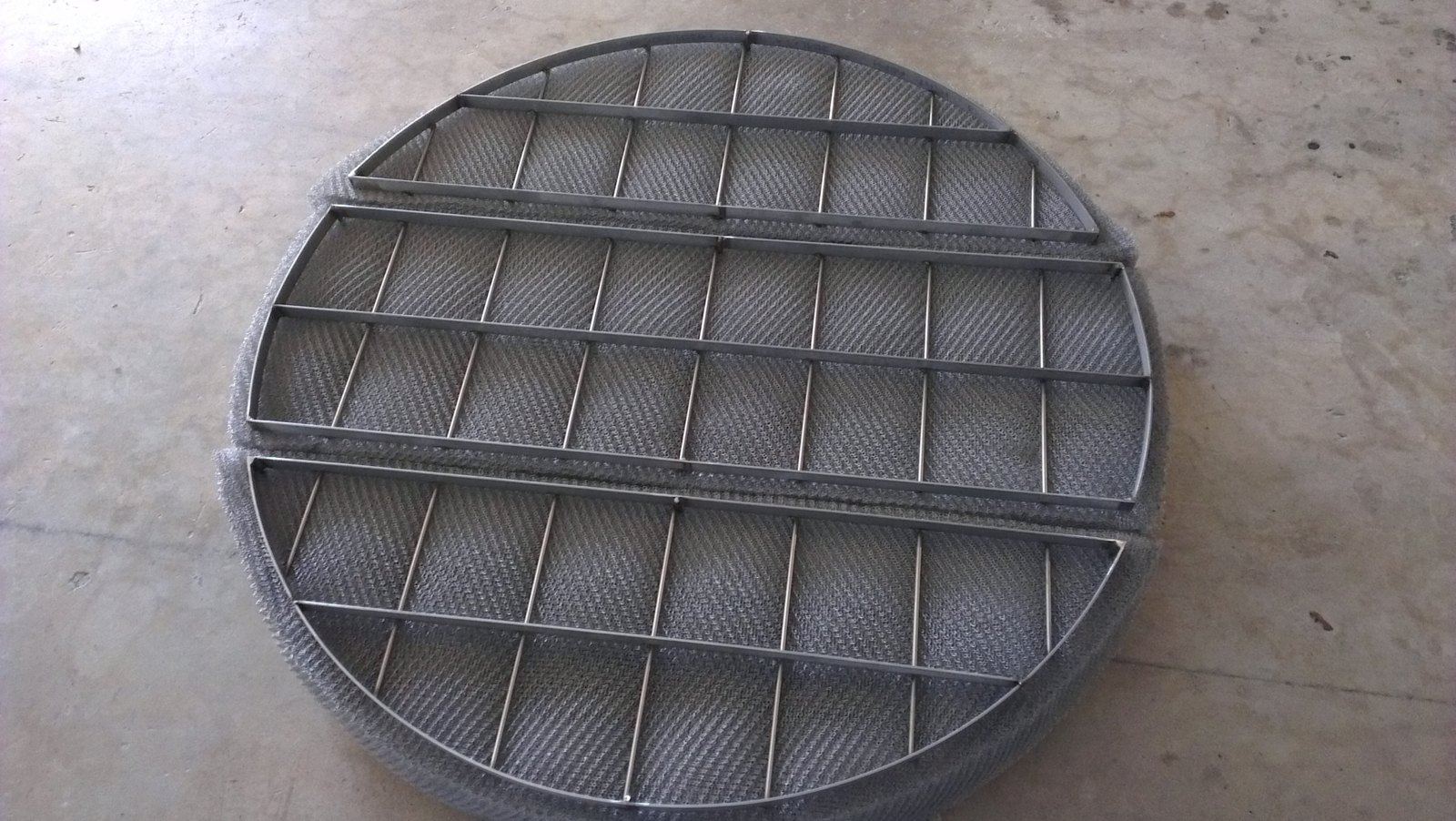
A wire mesh demister pad removes liquid droplets, from larger droplets to fine mist, from a gas stream. Replacement pads are made to your drawings, and large pads are split into sections so they fit through the manway.
A pad of knitted wire mesh placed inside a vessel. As gas flows through it, the small drops of liquid in the gas are caught on the wires, so only clean gas comes out.
Choose This Product When
- You need to remove droplets down to 5 µm
- You need removal efficiency above 99%
- You need a simple, low-cost unit that is easy to install (drawer type)
- Your service is very hot, very cold or corrosive (PTFE type)
Types
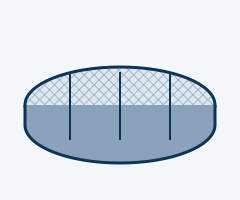 Standard pad
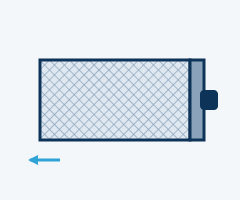 Drawer type
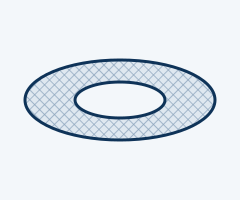 Ring type
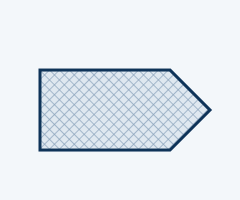 Special-shaped
 PTFE type
Photos
What We Need for a Quote
Send your own specification or drawing – or tell us what you know:
How It Works
Gas flows up through a pad of knitted wire mesh. The droplets are too heavy to follow the gas around the wires, so they hit the wires, merge into larger drops and drain off the bottom of the pad. The pad is usually installed horizontally near the top of the vessel, resting on a support grid with a hold-down grid on top.
Also called a pad demister, demister mesh pad or mesh pad mist eliminator. Common requests are replacement demister pads made to the old drawing, PTFE demister pads for hot or corrosive service, and demister pads for inert gas systems on tankers.
Applications
- Gas-liquid separation in the chemical and petroleum industries
- Towers and pressure vessels
- Inert gas systems on tankers
- Air filters
- Knock-out drums and gas scrubbers
- Evaporators, including desalination evaporators
- Tops of distillation and absorption columns
Often Used in These Industries
Types & Specifications
| Type | Data |
|---|---|
| Drawer type | Above 99.8% removal for droplets > 5 µm; up to 100% for droplets of 8–40 µm |
| Standard type | Removes 5 µm droplets; above 99% efficiency; pressure drop approx. 250 Pa |
| Special-shaped | Made to fit your vessel |
| Ring type | Ring-shaped pad |
| PTFE type | Long-term use at 200–260 °C; stays flexible down to −100 °C; resists almost all chemicals except molten alkali metals |
Materials
- Stainless steel
- PTFE (PTFE type)
Frequently Asked Questions
What is the difference between a demister pad and a vane mist eliminator?
A wire mesh demister pad catches smaller droplets, down to fine mist, but handles less liquid and can clog if the gas carries solids. A vane (chevron) mist eliminator handles high liquid loads and dirty gas, but mainly catches larger droplets.
Can a large demister pad be installed through a manway?
Yes. Large pads are split into sections that fit through the manway and are assembled inside the vessel.
How does a demister pad work?
Gas flows up through the knitted wire mesh. Droplets in the gas hit the wires, merge into larger drops and drain off the bottom of the pad, while the clean gas passes through.
What do you need to quote a replacement demister pad?
The vessel or housing diameter, pad depth, mesh density, material and manway size – or simply your old drawing. Our mist eliminator checklist lists everything we need.
Related Products
All Mist & Liquid Separation →Chevron Mist Eliminators (Vane Type)
Zigzag plates that remove droplets from gas
Oil-Water Coalescers
Removes water droplets from oil
Three-Phase Separator Internals
Splits a stream into gas, oil and water